
Torvald Klaveness 1966–1976: From building ships to building shipping systems
Part 3 of an 8-part story through the decades to mark our 80th anniversary
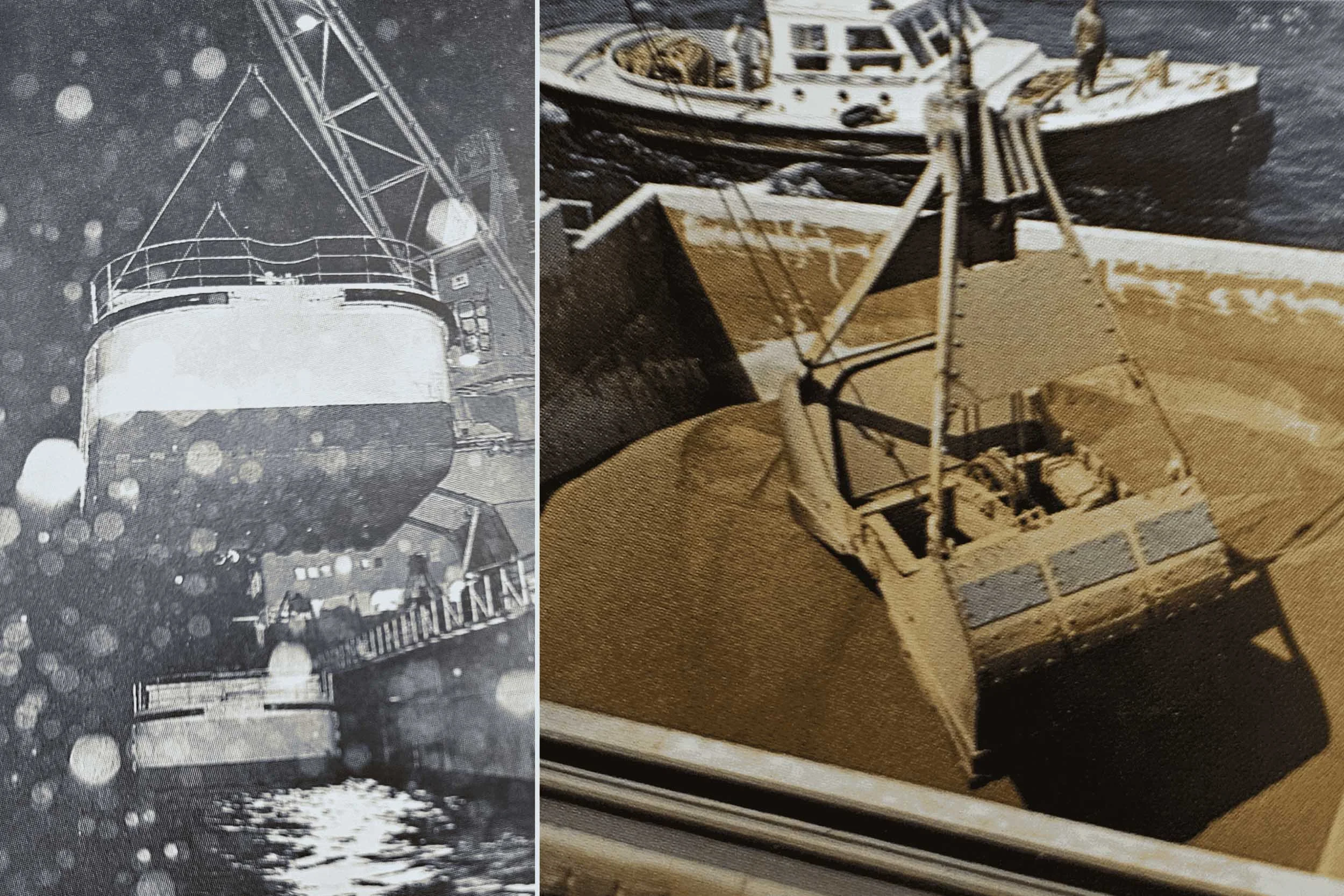
Image: Barges being lifted onboard a vessel in Bergen , then later used to transfer cargo to shore in Takoradi, Ghana
By the mid-1960s, Klaveness had developed a strong position in bulk shipping from experience gained in fertilizer, alumina, and cement trades. The company had learned how to move cargo differently. The next step was to apply that knowledge more deliberately.
It was no longer just about building ships. It was about rethinking how ships should be built and used in a changing market.
Designing ships around the trade
As Klaveness moved into more complex and geographically diverse trades, the limits of conventional shipping became clear. Standard vessels and established port infrastructure were often not suited to the cargo flows the company was working with.
In several cases, Klaveness was not entering an existing transport system. It was building one.
Operations in regions such as West Africa and New Guinea required solutions that went beyond traditional port-to-port shipping. Shallow waters, limited infrastructure, and difficult loading conditions meant that vessels, handling systems, and logistics had to be developed together.
This approach was supported by a growing network of partnerships across regions such as South America, Africa, Europe, and Asia. Through these relationships, and through pooling arrangements, Klaveness was able to develop shipping solutions at a scale that would not have been possible alone.
This led to the introduction of new vessel concepts and supporting systems. Ships were adapted to operate with lighters (barges), designed for constrained ports, and equipped to handle cargo with less reliance on terminal infrastructure. What emerged was not a single innovation, but a coordinated system where vessels, handling, and logistics worked together.
Innovation under pressure
These developments did not take place in a stable environment. Rising cost levels in Norway, particularly related to crewing and operations, put increasing pressure on the competitiveness of Norwegian-controlled tonnage.
At the same time, new approaches to crewing and operations were introduced. International manning and alternative structures became necessary to remain competitive in a global market.
Bulkhandling itself was also tested. Not all vessels fit easily within the pool, and aligning the interests of multiple partners required careful balance.
A different way of operating
By the end of the decade, Klaveness was operating in a fundamentally different way than ten years earlier. Ships were no longer defined by standard designs or market availability, but by the requirements of specific trades. Operations extended beyond the vessel to include cargo handling and logistics systems.
Klaveness was not simply adapting to the market. It was helping define how bulk shipping could be done.
In the following decade, these pressures would intensify, bringing further change in how the company was organized and operated.
Previous | Torvald Klaveness 1956–1966: Changing the way cargo moves
Next | Torvald Klaveness 1976-1986: Tested in a changing market